What is Seiko Prospex?
Seiko Prospex is the modern designation for Seiko's dive-watch and tool-watch collection — descended from the 1965 62MAS (Reference 6217-8000), Japan's first 150m water-resistant wristwatch. The Prospex range covers everyday dive watches (SRPE93 "Turtle", $600), 1965-heritage reissues (SPB143, $1,200), Marinemaster-tier capable divers (SLA037, $4,000+), Tuna saturation references, and SLA-series limited reissues. Seiko is Japanese (founded 1881 in Tokyo), but the Prospex line is foundational to global dive-watch history.
Why Japan matters in dive watchmaking
Seiko is one of the only major watchmaking nations outside Switzerland with comparable horological depth. The company has been producing watches in Tokyo since 1881, opened the Suwa Seikosha factory in 1942, and developed Japan's first wristwatch in 1924 (the Laurel). By the 1960s — when Switzerland was the only place in the world that mattered for serious wristwatches — Seiko was building movements, cases, hairsprings, dials, and jewels in vertically-integrated factories in Iwate and Nagano Prefectures. The vertical integration was unusual then and remains unusual now; only Rolex and a handful of Swiss independents match it.
The structural advantage of Seiko's vertical integration is that the company designs and manufactures every component of a Prospex watch in-house, including hairsprings (Seiko makes its own), balance wheels, escapements, cases (cut, machined, and finished in Japan), dials (printed in-house), and hands. Most Swiss watch brands at the Prospex price point ($600–$2,500) source ETA or Sellita movements, source cases from Swiss case-makers, and source dials from Cadrans Flückiger or similar suppliers. Seiko at the same price point uses entirely in-house components. The cost structure that follows is what enables an SPB143 ($1,200) to outspec a $3,000 Swiss equivalent on movement architecture.
The Spring Drive technology (introduced 1999, refined through Grand Seiko over the next 25 years) is one of the most important horological inventions of the past half-century — a hybrid mechanical-quartz movement that delivers quartz-grade accuracy with a glide-motion seconds hand and entirely mechanical power. Spring Drive sits in Grand Seiko rather than Prospex, but the technology was developed using the same engineering culture that produces the Prospex line. The 8L35 movement in the Marinemaster references is the direct technical ancestor of Spring Drive; the lineage runs through Prospex into Grand Seiko continuously.
The SPB143 is the most-recommended dive watch in horology that doesn't cost $4,000+. The 62MAS proportions, the 70-hour power reserve, the Seiko vertical integration. At $1,200, the watch delivers 80% of what a $4,000 Swiss equivalent does — and most owners can't identify the missing 20% without a loupe.
Subdial Editors
Heritage references
- 62MAS (Reference 6217-8000, 1965) — Japan's first dive watch. 38mm steel case, 150m water resistance, automatic Caliber 6217. Distinguished by no crown guards and a clean aluminum bezel insert. Issued to Japanese Self-Defense Forces and used by Japanese Antarctic researchers. Vintage 62MAS in honest condition: $5,000–$15,000.
- 6105 "Captain Willard" (1968–1976) — Cushion case, 150m water resistance, automatic Caliber 6105B (first Japanese automatic dive-watch caliber with hacking seconds and quickset day-date). Worn by Martin Sheen in Apocalypse Now (1979). The 6105-8110 reference is the cult collector's choice.
- 6309 "Turtle" (1976–1988) — The mass-production Seiko diver. 44mm cushion case, 150m water resistance, automatic Caliber 6309 (the workhorse Seiko movement of the era — 21,600 vph, 17 jewels). Inexpensive at retail when produced; widely available on the vintage market today at $400–$1,500 depending on condition.
- SKX007 (1996–2019) — The most-recommended sub-$300 dive watch in modern history. 42mm steel case, 200m water resistance, automatic Caliber 7S26, ISO 6425 dive certification. Production was discontinued in 2019 (the SKX007 lost ISO certification due to bezel-action specifications). Original SKX007 examples now trade at 2–3× their original retail price on the vintage market.
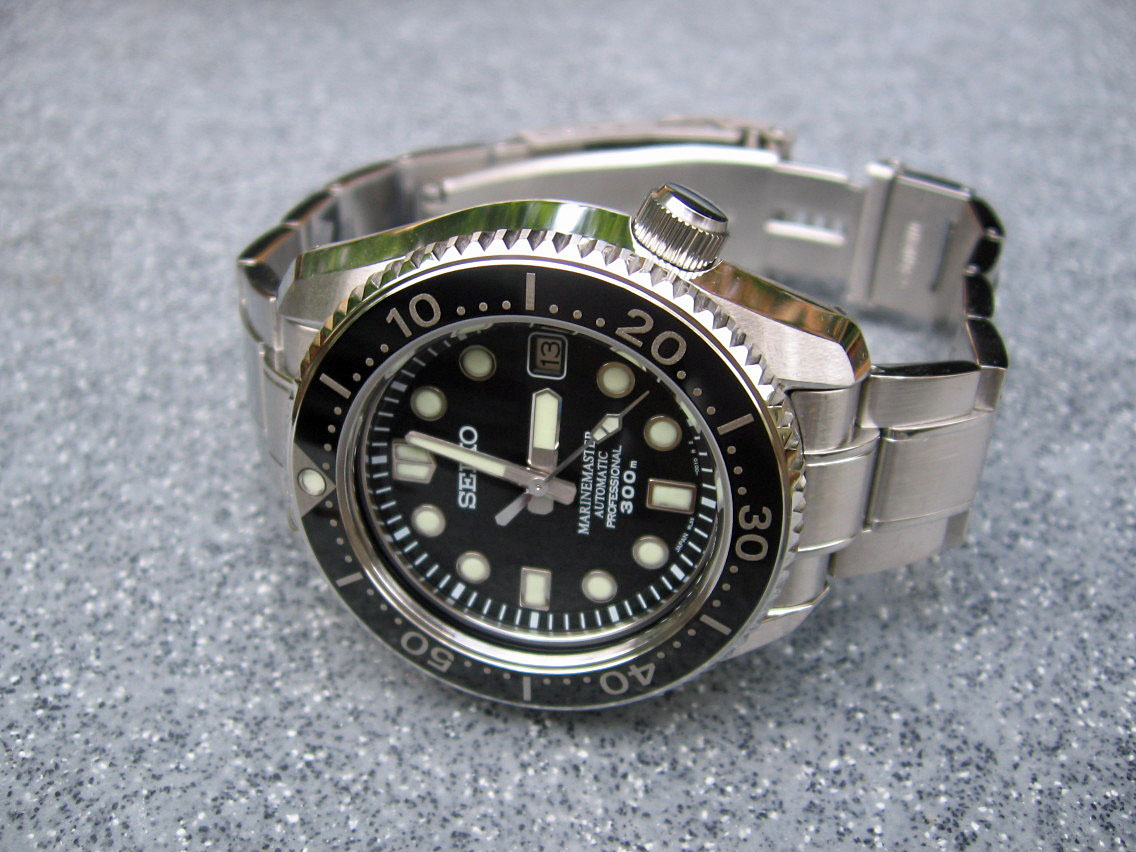
- 7C46 Tuna and Marinemaster (1986–present) — Saturation-diver capable references. The original 7C46 Tuna (Reference 7549-7000, 1975) was the world's first 600m quartz dive watch and the first "shrouded" dive watch design (the case shroud protects the bezel during heavy dive work). The Marinemaster line, introduced 1996, is the mechanical saturation-diver pole of the Prospex range.
Modern Prospex collection
- SRPE93 "Turtle" ($600) — 45mm cushion case, 200m water resistance, automatic 4R36 movement. The most-recommended sub-$1,000 mechanical dive watch. The cushion case references the 1976 6309 Turtle.
- SPB143 / SPB147 ($1,200) — 40.5mm 62MAS-inspired case, 200m water resistance, automatic 6R35 movement (70-hour power reserve), sapphire crystal, sapphire bezel insert. The modern reference Seiko diver and the value-king of the dive-watch category at any price.
- SPB153 "Captain Willard" ($1,500) — Cushion case 6105 reissue, 200m water resistance, 6R35 movement, sapphire crystal. The modern Captain Willard.
- SPB237 "Captain Willard" ($1,200) — Lower-cost cushion case reissue with 4R36 movement (vs 6R35 in SPB153). The value-Captain Willard for buyers who want the cushion case at the SPB143 price point.
- SLA017 / SLA037 / SLA063 ($4,000–$6,500) — Marinemaster-tier limited editions. 8L35 mil-spec movement, hand-finished, < 3,000-piece production runs. The serious-collector Prospex.
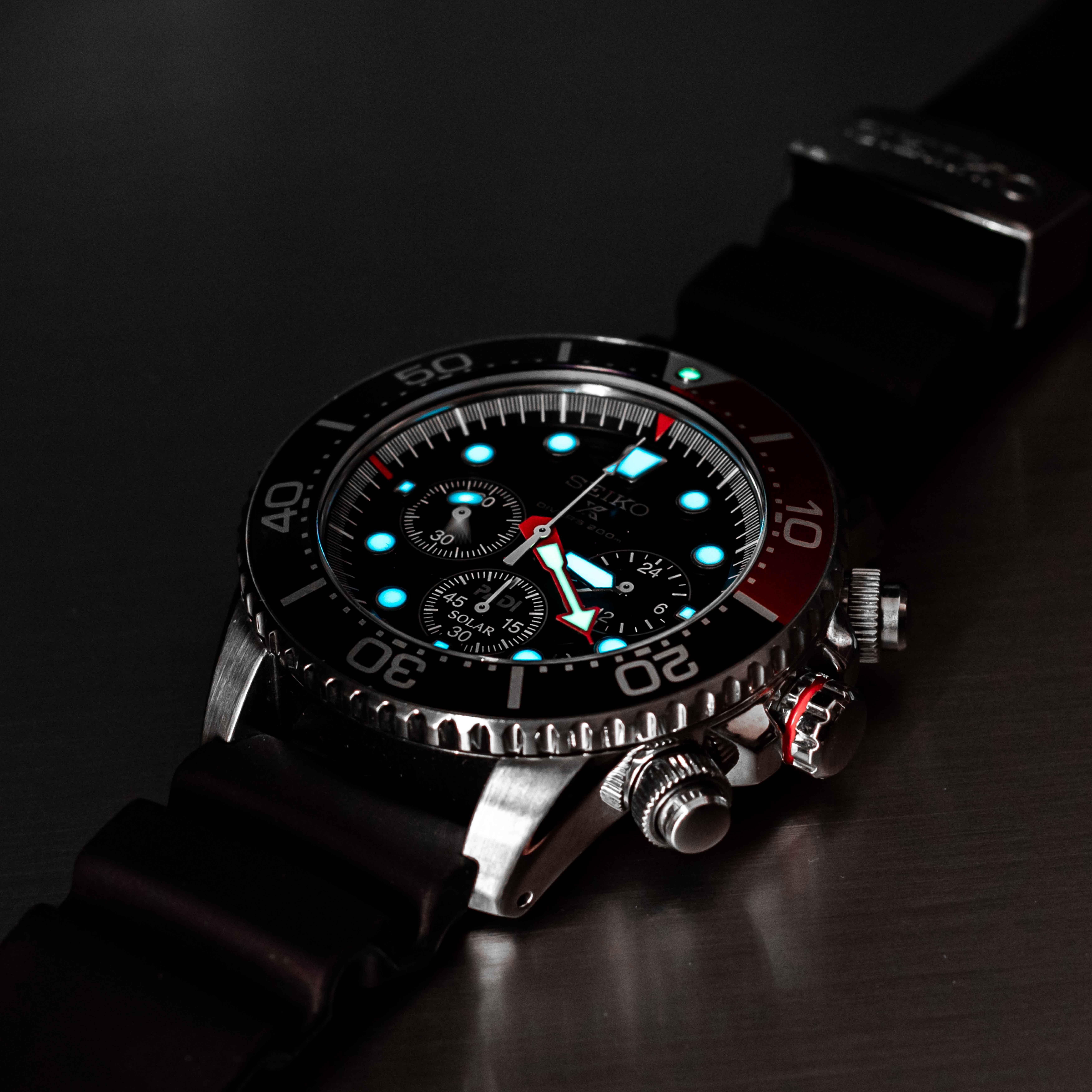
- Tuna SBBN045 / Tuna SLA041 ($1,500–$3,500) — Modern saturation-diver references. 1,000m water resistance, helium escape valve, shrouded case construction. Either quartz (7C46) or mechanical (8L35) depending on reference.
- SPB155 Alpinist ($795) — Compressor-case revival of the 1959 Alpinist. 38mm case, 200m water resistance, internal compass bezel rotated by inner crown at 4 o'clock, automatic 6R35 movement. The most-recommended sub-$1,000 alternative to a traditional dive watch.
Seiko movement architecture
The Prospex line uses three distinct in-house movement families across its price range:
- 4R36 — Entry-tier movement. 21,600 vph, 41-hour power reserve, hackable, hand-windable, day-date complication. Used in SRPE93 Turtle, Seiko 5 dive references, and the SPB237 Captain Willard. The 4R36 is Seiko's volume movement and runs reliably for decades with periodic service.
- 6R35 — Mid-tier movement. 21,600 vph, 70-hour power reserve, hackable, hand-windable. Used in SPB143/147, SPB153 Captain Willard, SBDC101 Alpinist, and most current Prospex references at $1,000–$1,800. The 6R35 is the workhorse of modern Seiko mid-tier and the movement that established Seiko as competitive with Swiss movements at the $1,000–$1,500 tier.
- 8L35 — Marinemaster-tier movement. 28,800 vph, COSC-comparable accuracy, hand-finished by Seiko Premier Mfg in Iwate. Used in SLA017, SLA037, SLA063 Marinemaster references and Tuna SLA041. The 8L35 shares architecture with Grand Seiko's 9S series and is the direct technical ancestor of the Marinemaster line. This is the movement that justifies the $4,000–$6,500 pricing of SLA-series Prospex.
Prospex vs Grand Seiko vs Citizen
Three Japanese dive-watch tiers sit on the same wrist-engineering culture:
- Citizen Promaster Diver ($350–$1,500). The Japanese everyday-dive-watch competitor. The NY0040 "Fugu" ($350) is Citizen's SPB143 equivalent and competes directly on value. Citizen uses different movement architecture (8203 base) and different case finishing — both excellent at the price point.
- Seiko Prospex ($600–$6,500). The dive-watch and tool-watch line. SPB143 is the value-king, SLA037 is the Marinemaster, Tuna SBBN045 is the saturation diver. Range covers entry-mechanical through limited-edition hand-finished.
- Grand Seiko ($4,000–$15,000+). The high-watchmaking line. Grand Seiko Sport Diver SBGA463 ($6,500) and SBGH289 ($6,800) compete with Tudor Pelagos and Omega Seamaster Diver 300M on finishing — Zaratsu-polished cases, applied diamond-cut indices, hand-polished hands. Grand Seiko sits clearly above Prospex in finishing and pricing; the engineering culture is shared.
Buyers who specifically want Japanese dive watches typically own across two tiers — a Citizen Promaster or Seiko Turtle as a daily beater, an SPB143 as the more-serious daily, and possibly an SLA-series Marinemaster or a Grand Seiko sport diver as the dressier piece. The progression is meaningful: each tier delivers genuinely better finishing without abandoning the design language.
What's worth knowing
Seiko's vertical integration is the structural reason the Prospex line outperforms its price point. The company produces its own movements, hairsprings, balance springs, jewels, cases, dials, and hands — a level of vertical integration matched only by Rolex and a handful of Swiss independents. Most Swiss watch brands at the Prospex price point source movements from ETA or Sellita; Seiko makes its own. The cost structure that follows is what enables an SPB143 ($1,200) to outspec a $3,000 Swiss equivalent.
The Prospex line sits below Grand Seiko (Seiko's haute-horlogerie line) but uses the same design and engineering culture. The SLA-series Marinemaster references are widely considered comparable to $5,000+ Swiss dive watches in finishing quality. The everyday Prospex line (4R36-based references like the SRPE93 Turtle) competes with Swiss watches at twice the price; the mid-tier (6R35-based, SPB143) competes with Swiss watches at three times the price. The value proposition is structurally embedded in Seiko's vertical integration and not easily replicable by Swiss makers operating without that integration.
Read next
For comparable dive references at adjacent price points:
- Tudor Black Bay — The Best Under $5,000
- Rolex Submariner — The Benchmark
- Doxa SUB — The Cousteau Watch
For the dive-watch category context: