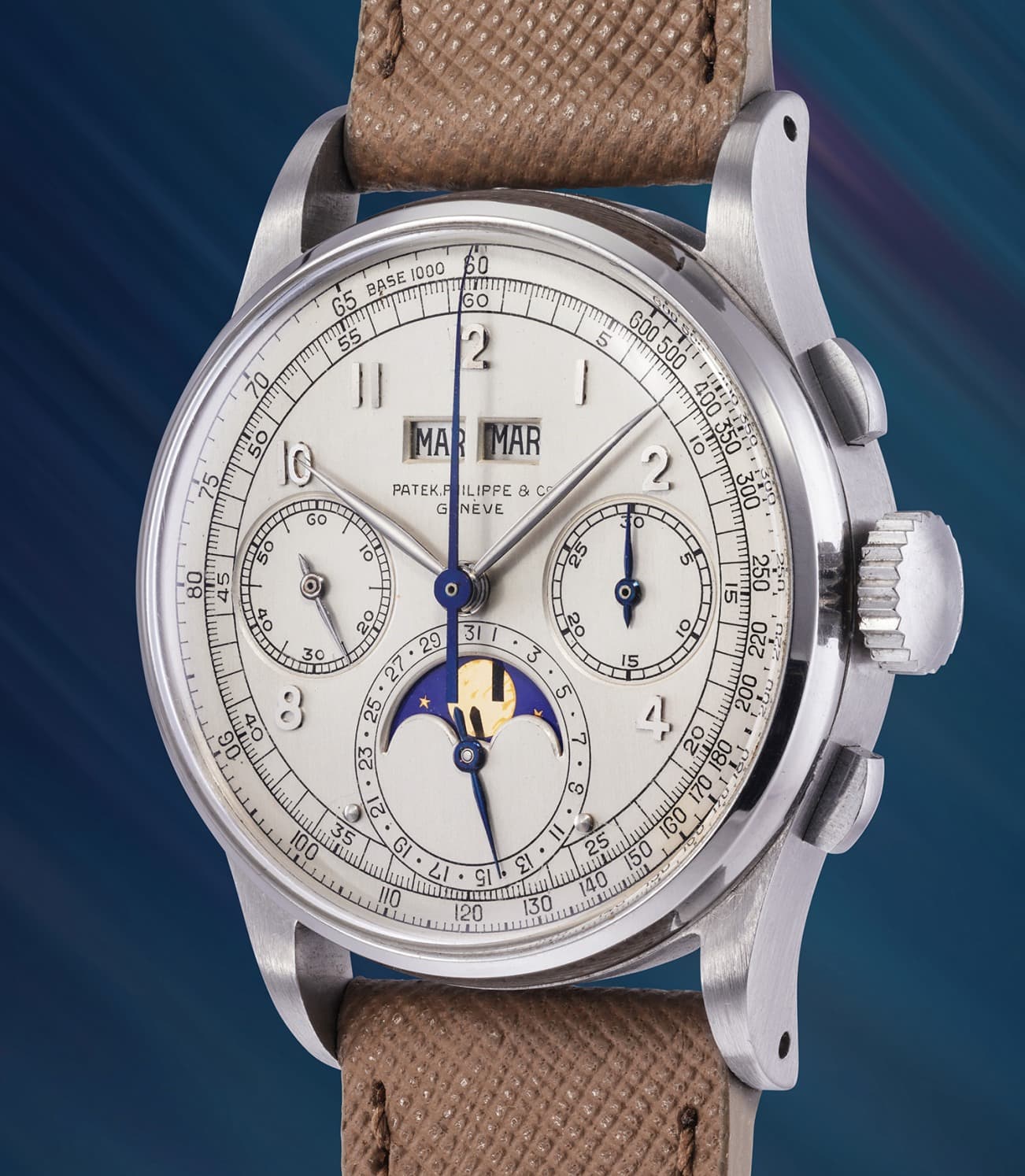
 Adinfinitum314!, CC0 1.0, via Wikimedia Commons
 What makes a watch Swiss-made
The "Swiss made" designation is a legal certification, not a marketing claim. To use it, a watch must satisfy the four tests defined by Swiss ordinance: (1) the movement is Swiss; (2) the movement is cased in Switzerland; (3) the manufacturer carries out the final inspection in Switzerland; and (4) at least 60% of the manufacturing costs are generated in Switzerland. The 60% threshold was raised from 50% in 2017 in response to industry concerns about "Swiss made" quality dilution. Watches that fail the test cannot use the "Swiss made" mark; some manufacturers use "Swiss movement" or "Swiss parts" as alternative claims for watches that meet only the movement-origin requirement.
The structural advantage of Swiss watchmaking is the ecosystem, not the certification. Switzerland concentrates the most specialized watchmaking supply chain in the world: case-makers (Stern Frères, MGT), dial-makers (Cadrans Flückiger, Stern Création), hairspring-makers (Nivarox-FAR, the Swatch Group's monopoly on volume hairsprings), jewel-makers (Brügger, Bonzon), and finishing specialists (independent ateliers in the Vallée de Joux). A Swiss maker can source any component from a 90-minute drive of their workshop. No other country has comparable depth in the supply chain — which is why " Swiss made" carries weight beyond the legal definition.
The Swiss watchmaking hierarchy
Swiss watchmaking is structured by tiers that the industry doesn't officially publish but everyone in horology recognizes. Four broad layers, from top to bottom:
The Holy Trinity — Patek Philippe (1839, Geneva), Audemars Piguet (1875, Le Brassus), and Vacheron Constantin (1755, Geneva). Three houses widely considered the apex of haute horlogerie. Hand-finished movements, multi-year retail waitlists for steel sport-luxury references, auction prestige, and the Patek Seal / Geneva Seal certification standards. Annual production: 70,000 (Patek), 40,000 (AP), 20,000 (Vacheron). Some collectors include A. Lange & Söhne (German, Saxony) as a Trinity-equivalent fourth — making "Trinity-plus-Lange" the de-facto top of mechanical watchmaking.
The Top Tier — Rolex (1905, Geneva), Jaeger-LeCoultre (1833, Le Sentier), Blancpain (1735, Le Brassus), and Richard Mille (2001, Les Breuleux). Rolex is structurally unique: a publicly invisible private trust with the largest production scale (~1,000,000 watches/year) and the strongest cultural recognition of any luxury watch brand. Jaeger-LeCoultre is "the watchmaker's watchmaker," historically supplying movements to the entire Trinity (the Patek 1518 perpetual calendar chronograph, the earliest AP automatic Royal Oaks, and many vintage Vacherons all carry JLC base movements). Blancpain claims continuous operation since 1735, the oldest of any Swiss watchmaker. Richard Mille, founded 2001, is the contemporary independent — tonneau cases, openworked movements, prices benchmarked to supercars, and the most-discussed new luxury watch brand of the century.
The Major Houses — Omega (1848, Biel/Bienne), IWC (1868, Schaffhausen), Breitling (1884, Grenchen), Cartier (Paris-founded but Swiss-manufactured since the 1970s), Panerai (Florence-founded but Swiss-manufactured since 1997), and Tudor (1926, Geneva). The accessible luxury makers — established brands with substantial production scales, Swiss-made designation, and pricing roughly $4,000–$15,000 across most of their catalogs. Tudor is structurally interesting as Rolex's sister brand, owned by the same Hans Wilsdorf Foundation, with shared case-making infrastructure and quality-control standards.
The Core Makers — Zenith (1865, Le Locle), TAG Heuer (1860, La Chaux-de-Fonds), and Chopard (1860, Geneva and Fleurier). Smaller and quieter than the major houses but historically and technically significant. Zenith owns the El Primero (1969) — the first integrated automatic chronograph and a movement still in current production at 36,000 vph. TAG Heuer owns the motorsport chronograph tradition (Carrera, Monaco, Autavia). Chopard's L.U.C. line is some of the best-finished movement work in Switzerland, mostly unrecognized outside enthusiast circles.
Below this hierarchy sit the volume Swiss makers (Tissot, Hamilton, Mido, Certina, Longines, Frederique Constant) at the under-$2,000 tier and the independent haute horlogerie makers (F.P. Journe, MB&F, Greubel Forsey, Akrivia, Voutilainen) above the Trinity in finishing standards but below in recognition. Each layer of the hierarchy has its own buyer — and there are good arguments for buying at any of them.
The Swiss watchmaking hierarchy is real but it isn't official. Patek, AP, and Vacheron sit at the top. Rolex sits adjacent, with the largest cultural footprint. Beneath them, the major houses, the core makers, and the volume Swiss brands stack into a coherent industry that has shaped wristwatch culture for 150 years.
Subdial Editors
Geographic clusters
Swiss watchmaking is concentrated in five geographic clusters, each with its own specializations:
- Geneva — Patek Philippe, Vacheron Constantin, Rolex (headquarters and one of three production sites), Roger Dubuis, Chopard (one of two sites), F.P. Journe. The Geneva Seal certification (Hallmark of Geneva) requires manufacture and finishing within the canton. Geneva is the haute-horlogerie capital and the most-recognized Swiss watchmaking location.
- Vallée de Joux — Audemars Piguet, Blancpain, Jaeger-LeCoultre, Patek Philippe (production), Vacheron Constantin (production). The high-altitude valley running northwest of Lake Geneva is the historic home of complications. Many Trinity movements are made here in workshops that have operated for 150–200 years.
- La Chaux-de-Fonds and Le Locle — Tissot, Tag Heuer, Zenith, Cartier (production), and the original homes of many storied chronograph makers. La Chaux-de-Fonds is the largest watchmaking city in Switzerland by population — designed in the 19th century specifically to support watchmaking with parallel streets oriented to maximize daylight in workshops. UNESCO listed La Chaux-de-Fonds as a World Heritage Site in 2009 for this watchmaking-driven urban design.
- Biel/Bienne — Omega, Rolex (one of three production sites, the largest), Tudor (production), and the headquarters of the Swatch Group. Biel sits at the language border between French- and German-speaking Switzerland and is the largest production cluster by volume.
- Schaffhausen — IWC's headquarters and production site in the German-speaking northeast of Switzerland. Schaffhausen is unusual for being German-cultural — IWC was founded by an American watchmaker (Florentine Ariosto Jones) in 1868 specifically to combine American assembly methods with Swiss watchmaking expertise.
The independence axis
The most important structural distinction in Swiss watchmaking is independence vs. group ownership. The major Swiss conglomerates — Swatch Group (Omega, Longines, Tissot, Hamilton, Breguet, Blancpain, Glashütte Original, plus ETA movement supply), Richemont (Cartier, IWC, Panerai, JLC, Vacheron, Roger Dubuis, A. Lange & Söhne, et al.), and LVMH (TAG Heuer, Hublot, Zenith, plus Bulgari) — own most Swiss watch brands. Group structure shapes movement supply, pricing strategy, and product positioning across their catalogs.
The genuinely independent makers — Rolex (Hans Wilsdorf Foundation), Patek Philippe (Stern family), Audemars Piguet (Audemars and Piguet families), Richard Mille (Richard Mille and Dominique Guenat), F.P. Journe (François- Paul Journe), and a handful of smaller independents — operate without parent-company oversight and develop their movements, manufacturing, and brand strategy in-house. Independence isn't a quality marker on its own — Swatch Group movement quality is excellent — but the independents tend to produce more distinctive movements and more controlled brand strategies. The top of haute horlogerie is dominated by independent makers.