What's the best watch under $1,000?
The Seiko Prospex SPB143 ($900–1,200) is the most-recommended dive watch under $1,500 — in-house 6R35 movement, 200m water resistance, sapphire crystal. The Tissot PRX Powermatic 80 ($725) is the best integrated-bracelet sport-luxury value in horology. The Hamilton Khaki Field Automatic ($845) gives you American-heritage Swiss-made automatic in field-watch proportions. The Sinn 556 A ($895) is the most-recommended German pilot watch in the tier. All four are widely considered "first-keeper" watches.
What this tier is
The under-$1,000 tier is where the keeper watch lives. Not the first watch most enthusiasts buy — that was probably a Seiko 5 or a fashion piece — but the first watch they keep. The mechanical engineering is genuinely good. The case finishing is competent. The bracelets are properly built. And the watches at this tier are the ones that often outlast the trends, the upgrade plans, and the next three watch purchases.
Several things change between under-$500 and under-$1,000. Sapphire crystal becomes the baseline. In-house Japanese movements — the Seiko 6R35 with its 70-hour power reserve, the Citizen 9051 — replace the entry-tier 4R36 and 8203 calibers. Swiss-made watches gain anti-shock systems (Incabloc on ETA-derived movements) and proper finishing on the visible plates. Bracelets move from folded links to solid links with milled clasps. And the dial work — applied indices, sunburst patterns, properly printed minute tracks — starts to show the attention you find on luxury pieces, just at a different price point.
Three production traditions dominate the tier. Japanese, led by Seiko and Citizen, owns the dive-watch and tool-watch space. Swiss, led by the Swatch Group brands (Tissot, Hamilton, Mido, Certina), owns the dressier and field-watch space. German, led by Sinn and Stowa from Frankfurt and the Black Forest, owns the pilot-watch and tegimented-case niche. Each tradition has its own flagship at this price, and a buyer choosing between them is choosing not just a watch but a watchmaking philosophy.
The first-keeper watch is rarely the most expensive watch a buyer will ever own. It is the one that survives the upgrade plans — the watch that keeps coming out of the box.
Subdial Editors
The recommendations
These nine watches are the most-recommended pieces under $1,000 across diving, field, dress, and pilot categories. Each represents the strongest case at its price for a buyer who wants a single, serious, long-term-keeper watch.
Seiko Prospex SPB143 / SPB147 ($900–1,200)
The 62MAS-tribute modern Seiko diver. 40.5mm case, 200m water resistance, in-house 6R35 automatic movement (70-hour power reserve, fully hackable, hand-windable), sapphire crystal, sapphire bezel insert. The most-recommended dive watch in the $1,000–$1,500 range. The SPB143 (silver dial, sunburst pattern) and SPB147 (black dial) are the two main variants, both inspired by the 1965 Seiko 62MAS — the first Japanese dive watch. Routinely discounts to $900–1,000 from authorized dealers like Seiko Boutique, Long Island Watch, and Topper Jewelers. Considered a category-defining value piece — the pricing-equivalent of the Tudor Black Bay 58 at half the price.
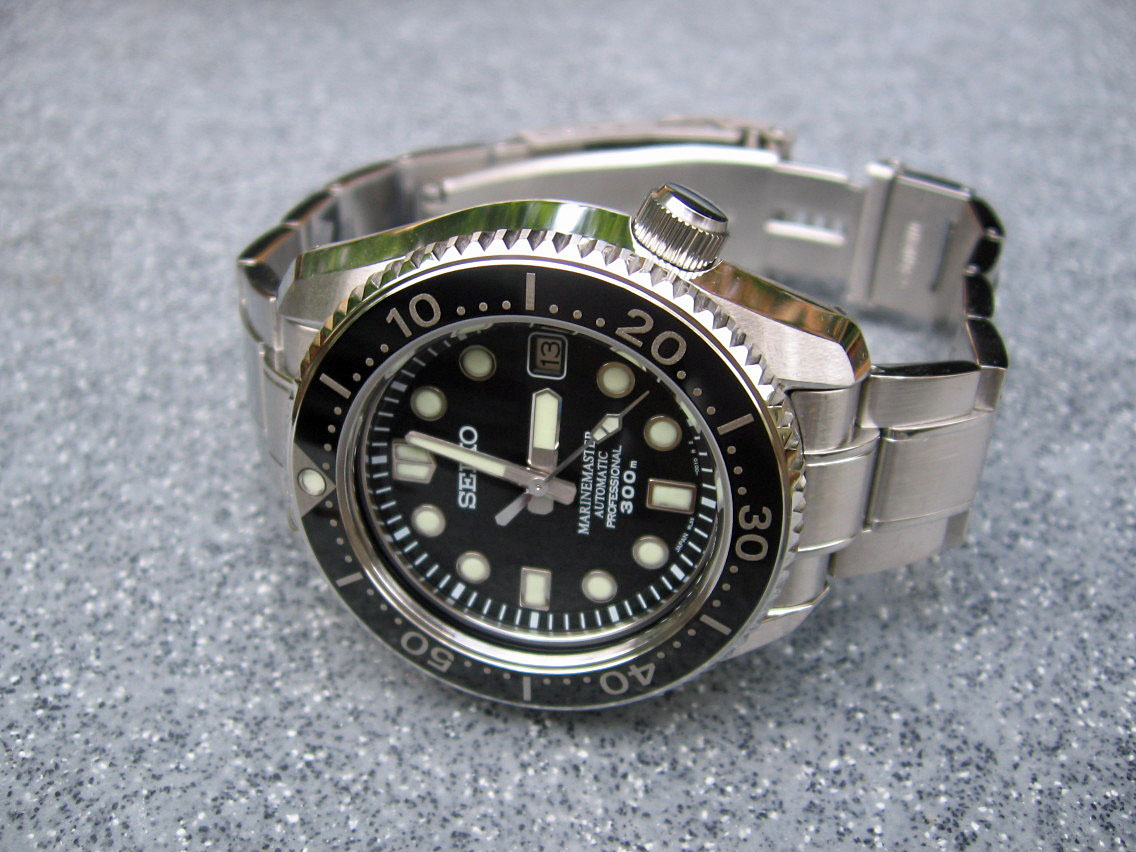
Seiko Prospex Alpinist SPB155 ($795)
The vintage-compressor revival. 38mm case, 200m water resistance, in-house 6R35 movement, internal compass bezel rotated by an inner crown at 4 o'clock. The Alpinist line dates to 1959; the SPB155 reissue brings the original compressor-style case dimensions back into production. Smaller and dressier than the SPB143 with a unique inner-rotating-bezel feature. Available with green, cream, or black dial. The most-recommended sub-$1,000 watch under 40mm and the most-recommended sub-$1,000 alternative to a traditional dive watch.
Tissot PRX Powermatic 80 ($725)
The Genta-tribute integrated-bracelet automatic. 40mm steel case, 100m water resistance, integrated bracelet, sapphire crystal, Powermatic 80 movement (80-hour power reserve, ETA C07.111 base with Tissot regulation and Nivachron hairspring). Released 2021 as a revival of a 1978 Tissot reference. The 1976 Genta-designed Patek Nautilus and 1972 Genta-designed Audemars Royal Oak define the integrated-bracelet sport-luxury aesthetic; the PRX brings that look into under-$1,000 territory at a quality level competitive with watches at five times the price. Available in blue, green, ice-blue, white, and black dials. Widely considered the single best value in horology under $1,000.
Hamilton Khaki Field Automatic ($845)
The American-heritage field watch. 38mm or 42mm case, 100m water resistance, H-10 movement (80-hour power reserve, modified ETA 2824-2 with Hamilton regulation), military aesthetic with Arabic numerals and Mercedes hour hand. Hamilton was founded in Lancaster, Pennsylvania in 1892 and supplied U.S. military watches through both World Wars before relocating to Switzerland in 1969 (now part of Swatch Group). The H-10 movement is one of the best volume-production Swiss automatic movements at any price under $1,000. The Khaki Field Auto is the canonical "field watch" in modern horology and the most-recommended Swiss-made automatic field watch under $1,000.
Sinn 556 A ($895)
The German pilot watch. 38.5mm case, 200m water resistance, ETA 2824-2 movement (38-hour power reserve), tegimented case option (surface-hardened to 1,500 HV), soft-iron inner case for anti-magnetic protection, captive bezel. Sinn — founded 1961 in Frankfurt by Helmut Sinn — built the watches worn by Bundeswehr pilots, the GSG-9 anti-terror unit, and German naval forces. The 556 A is the most-accessible Sinn pilot watch and the most-recommended German watch in the tier. The criticism: the ETA 2824-2 movement is dated compared with the Tissot Powermatic 80 or Seiko 6R35; the 38-hour power reserve is short for the price. The compensations are German build quality, anti-magnetic and tegimented options, and a brand pedigree the Swiss volume brands can't match.
Christopher Ward C60 Trident Pro 300 ($895)
The COSC-certified micro-brand dive watch. 40mm case, 300m water resistance, Sellita SW200-1 automatic movement with COSC chronometer certification (-4/+6 seconds per day), ceramic bezel insert, sapphire crystal. Christopher Ward — founded 2004 in Maidenhead, UK with assembly in Biel, Switzerland — is the largest and most-respected English-founded micro-brand. The C60 Trident Pro 300 is the only sub-$1,000 dive watch with full COSC certification at this writing. Resale value is meaningfully softer than Seiko, Tissot, or Hamilton — micro-brand recognition discount runs 20–30%. Buy because you want the watch, not as an investment.
Junghans Max Bill Automatic ($1,000)
The Bauhaus dress watch. 38mm case, 30m water resistance, J800.1 automatic movement (modified ETA 2824, 38-hour power reserve), domed Plexiglas crystal with sapphire-coating option. Designed in 1961 by Max Bill — Bauhaus alumnus and Ulm School of Design rector — the Max Bill is the most-recognized Bauhaus wristwatch in production. Junghans is German (Schramberg, Black Forest) and one of the few sub-$1,000 watches with genuine industrial-design provenance. Sits at the top of the tier and overlaps slightly into the next; pricing fluctuates with USD/EUR rate.
Mido Ocean Star 200C ($870)
The Swiss-made volume diver. 42.5mm case, 200m water resistance, Caliber 80 movement (80-hour power reserve, modified ETA 2824), ceramic bezel, sapphire crystal. Mido is a Swatch Group brand based in Le Locle. The Ocean Star line is priced as a value entry to Swiss-made dive watches. Less recognized than Tissot or Hamilton but mechanically competitive. A defensible Swiss-made dive watch alternative for buyers who don't want the Seiko aesthetic.
Citizen Series 8 Automatic ($795)
The Japanese alternative to the Tissot PRX. 40.8mm case, 100m water resistance, Caliber 9051 automatic movement (50-hour power reserve, fully hackable), integrated bracelet design. Released 2022 as Citizen's mid-tier mechanical line. The Series 8 is a less-recognized but genuinely strong-value alternative to the Swiss-made integrated-bracelet sport watches in the tier. Multiple dial colors. The criticism is the same as Christopher Ward: brand recognition undercuts resale even though the watch is mechanically excellent.
What you give up at this tier
The under-$1,000 tier is genuinely good, but several things still wait at the next price point:
- Full in-house movements. Most under-$1,000 Swiss watches use modified ETA architecture rather than fully proprietary calibers. The Seiko 6R35 is the exception — a true in-house movement at $900. The next tier ($3,500+) brings Tudor MT5402, Omega Co-Axial 8800, and Cartier 1847 MC.
- Anti-magnetic certification. Sinn offers tegimented and anti-magnetic options at the top of this tier; otherwise, Faraday-cage anti-magnetic certification (Omega Master Co-Axial: 15,000 gauss) requires $5,000+.
- Hand-finishing. Plates, bridges, and bevels at this tier are machine-finished. The Côtes de Genève, perlage, and polished anglage you find on JLC, Cartier, and Patek movements requires $4,000+ for entry-level examples.
- Multiple bracelet options. Most under-$1,000 watches ship with one bracelet or one strap — sometimes both. The quick-change bracelet systems (Tudor T-Fit, Omega micro-adjustment, Rolex Glidelock) are tier-up features.
- Strong resale appreciation. Watches at this tier hold 50–65% of retail. None appreciate. The first watches that consistently hold or grow in value start at $4,000+ (Tudor Black Bay 58, Omega Speedmaster Professional) and become consistent above $10,000 (Rolex sport, Patek, AP).
Ownership cost
Mechanical watches at this tier need service every 5–8 years. Service cost depends on the movement architecture: ETA-derived movements (Tissot, Hamilton, Sinn, Mido) run $200–350 at Swatch Group service centers; Sellita-based movements (Christopher Ward) run $200–350 with most independent watchmakers; Seiko 6R35 runs $200–300 at Seiko Service or Right Time. Total 30-year ownership cost for a $895 Sinn 556 A with five services: roughly $2,000–2,500 — and the Sinn will likely outlast its owner.
The 80-hour power reserve on Powermatic 80, H-10, and Caliber 80 movements is a meaningful real-world advantage. A watch with 80 hours of reserve can be set down on Friday evening and picked up Monday morning still running — most older ETA 2824-derived movements (38-hour reserve) cannot. This matters for buyers who rotate between watches; it matters less for single-watch buyers.
If you can stretch to under $5,000
The next tier opens up the first-luxury territory: Tudor Black Bay 58 ($3,950 — the most-recommended single watch in horology at any price), Omega Aqua Terra 38 ($5,400), TAG Heuer Carrera Heuer 02 ($5,950), Cartier Tank Solo XL ($3,000), and the entry Cartier Santos Medium ($7,200 — slightly above tier but within reach with discounts). Cross the $3,500 line and you're in genuine luxury watchmaking — full in-house movements, COSC chronometer certification on most pieces, and bracelets with quick-change systems. See our under-$5,000 guide for full coverage.
Read next
For the next tier up — first-luxury territory with full in-house movements and proper anglage:
For the dive-watch tradition the SPB143 anchors at this tier: