What's the best luxury watch under $5,000?
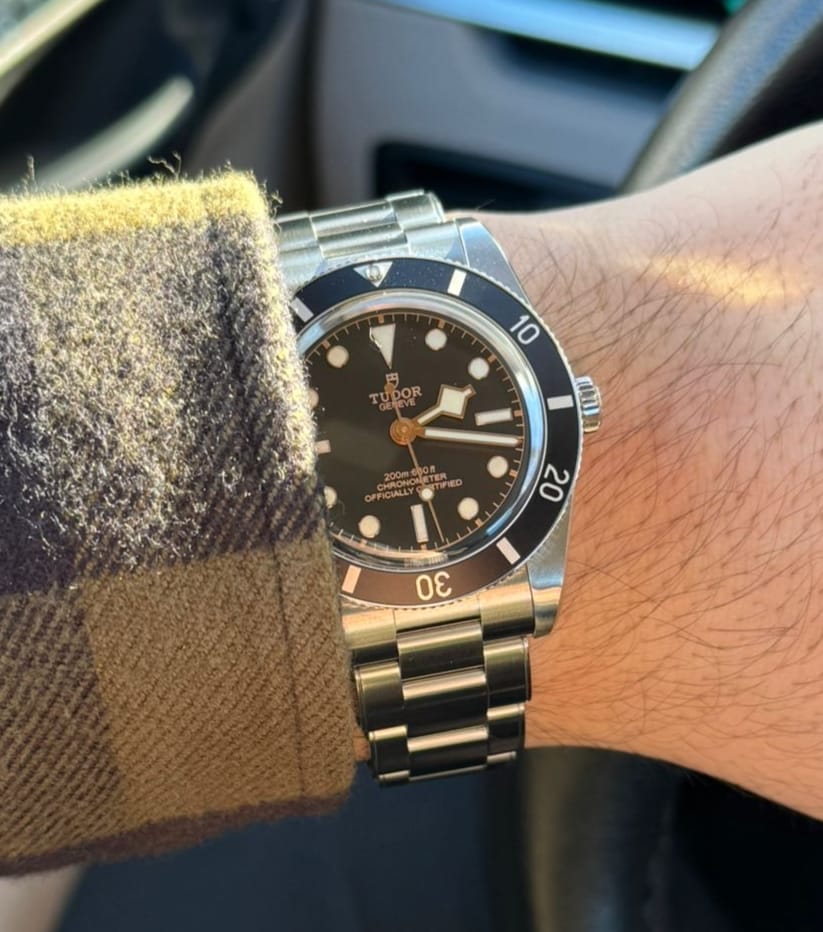
The Tudor Black Bay 58 ($3,950) is the most-recommended luxury watch under $5,000 by widespread consensus. In-house Manufacture Caliber MT5402 (COSC-certified, 70-hour power reserve), vintage-inspired 39mm proportions, Rolex-tier case quality, and pricing well below the Submariner. Other top picks: Tudor Black Bay 54 ($4,225), Tudor Pelagos 39 ($4,500), Cartier Tank Must ($2,790), Grand Seiko SBGM221 ($4,500), Nomos Tangente Neomatik ($4,200). The under-$5K tier is where in-house Manufacture Caliber movements become standard.
What this tier is
The under-$5,000 tier is the first luxury tier in the literal sense: the price point where you are paying for finishing, brand provenance, and meaningful technical infrastructure rather than just movement adequacy. Every watch in this tier carries a full in-house Manufacture Caliber. Most carry COSC chronometer certification (-4/+6 seconds per day). Case finishing, bracelet quality, and dial work all step up from the under-$1,000 tier, and for the first time the watches genuinely compete with $10,000+ pieces on the wrist.
Tudor anchors the tier. The Hans Wilsdorf Foundation, which owns Rolex, also owns Tudor, and Tudor sport-line case quality and quality control come from the same Geneva infrastructure. The Manufacture Caliber MT-series movements (introduced 2015 with the Pelagos and rolled across the sport line) are proprietary to Tudor with silicon balance springs, 70-hour power reserves, and COSC certification across the catalog. Three Tudor references — the Black Bay 58, the Black Bay 54, and the Pelagos 39 — sit between $3,950 and $4,500 and represent the strongest sub-$5,000 case for sport-watch buyers.
Cartier anchors the dress-watch case. The Tank — designed in 1917 by Louis Cartier and inspired by the silhouette of WWI Renault FT tanks — is the most-recognized rectangular wristwatch in horology and one of the most-recognized wristwatch designs of any shape. The Tank Must (quartz, $2,790; mechanical $3,500) and Tank Louis Cartier (manual mechanical, $3,100–$4,800) sit comfortably under $5,000 and represent the dress-watch pole of the tier.
The remaining picks come from independents and value-Swiss makers: Oris, Longines, Grand Seiko, and Nomos. Each represents a defensible alternative to the Tudor-Cartier axis. Oris brings high-spec independent Swiss with the 5-day Calibre 400; Longines brings flieger GMT heritage; Grand Seiko brings dial finishing that exceeds Tudor at the same price; Nomos brings Glashütte minimalism with proprietary movements and German-import quality.
The Black Bay 58 is the most-bought first serious mechanical watch of the modern era. The reasons are structural: a Manufacture Caliber, a Wilsdorf Foundation case, and a price that sits just below the threshold where Rolex begins.
Subdial Editors
The recommendations
These ten watches are the most-recommended pieces under $5,000 across diving, dress, GMT, and pilot categories. The list spans Switzerland, Germany, and Japan — the three production traditions that matter at this price point.
Tudor Black Bay 58 ($3,950)
The reference recommendation of the entire tier. 39mm steel case, 200m water resistance, Manufacture Caliber MT5402 (COSC-certified, 70-hour power reserve, silicon balance spring), domed sapphire crystal, riveted bracelet inspired by vintage Tudor Submariners. Available in blue (BB58 Blue, the most-bought variant), black, and bronze (BB58 Bronze). The vintage-inspired 39mm dimensions and faux-aged lume bring 1958 Tudor Submariner proportions into modern production. The single most-recommended watch at any sub-$5,000 price point and the most-bought "first serious mechanical watch" of the 2020s.
Tudor Black Bay 54 ($4,225)
The 37mm version. 37mm steel case, 200m water resistance, Manufacture Caliber MT5400 (the smaller 37mm-case variant of the MT54xx family, COSC-certified, 70-hour power reserve). Released 2023 and based on the 1954 Tudor Oyster Prince Submariner reference 7922. The smallest current Tudor sport watch and the most-recommended sub-$5,000 watch under 40mm. For buyers with smaller wrists or those who prefer 1950s-era proportions over the 1958 Black Bay 58 silhouette.
Tudor Pelagos 39 ($4,500)
The titanium technical diver. 39mm grade-2 titanium case, 200m water resistance, Manufacture Caliber MT5400 (COSC-certified, 70-hour power reserve), titanium bracelet with T-fit clasp (5-stop micro-adjustment), helium escape valve, ceramic bezel. The Pelagos 39 is the more technical Tudor — lighter on the wrist than steel BB references, no vintage aesthetic, modern matte-titanium finishing. Released 2022 and recommended for buyers who specifically want a serious dive watch without vintage proportions.
Cartier Tank Must ($2,790–$3,500)
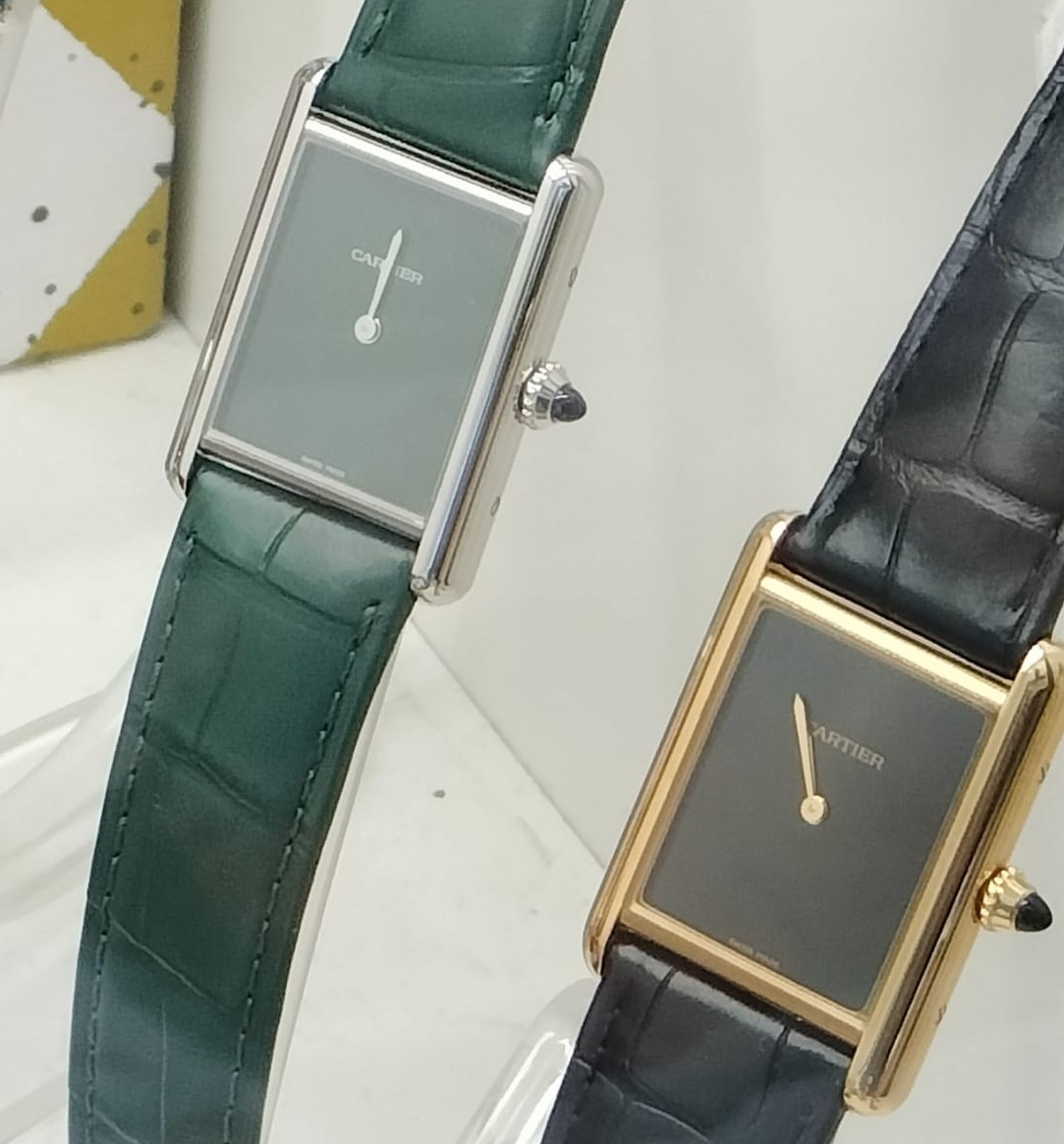
The dressy entry to Cartier. Rectangular case (33.7mm × 25.5mm or 41mm × 31mm), Roman numerals, blued steel hands, leather strap. Available in quartz with SolarBeat photovoltaic battery (no battery change needed for the watch's life — 16-year claimed lifespan) or mechanical (manual-wind ETA-derived caliber 1847 MC base). The Tank Must is the most-accessible Cartier Tank reference and the most-recommended sub-$5,000 dress watch. The SolarBeat quartz variant is the lowest-maintenance dress watch in the tier.
Cartier Tank Louis Cartier ($3,100–$4,800)
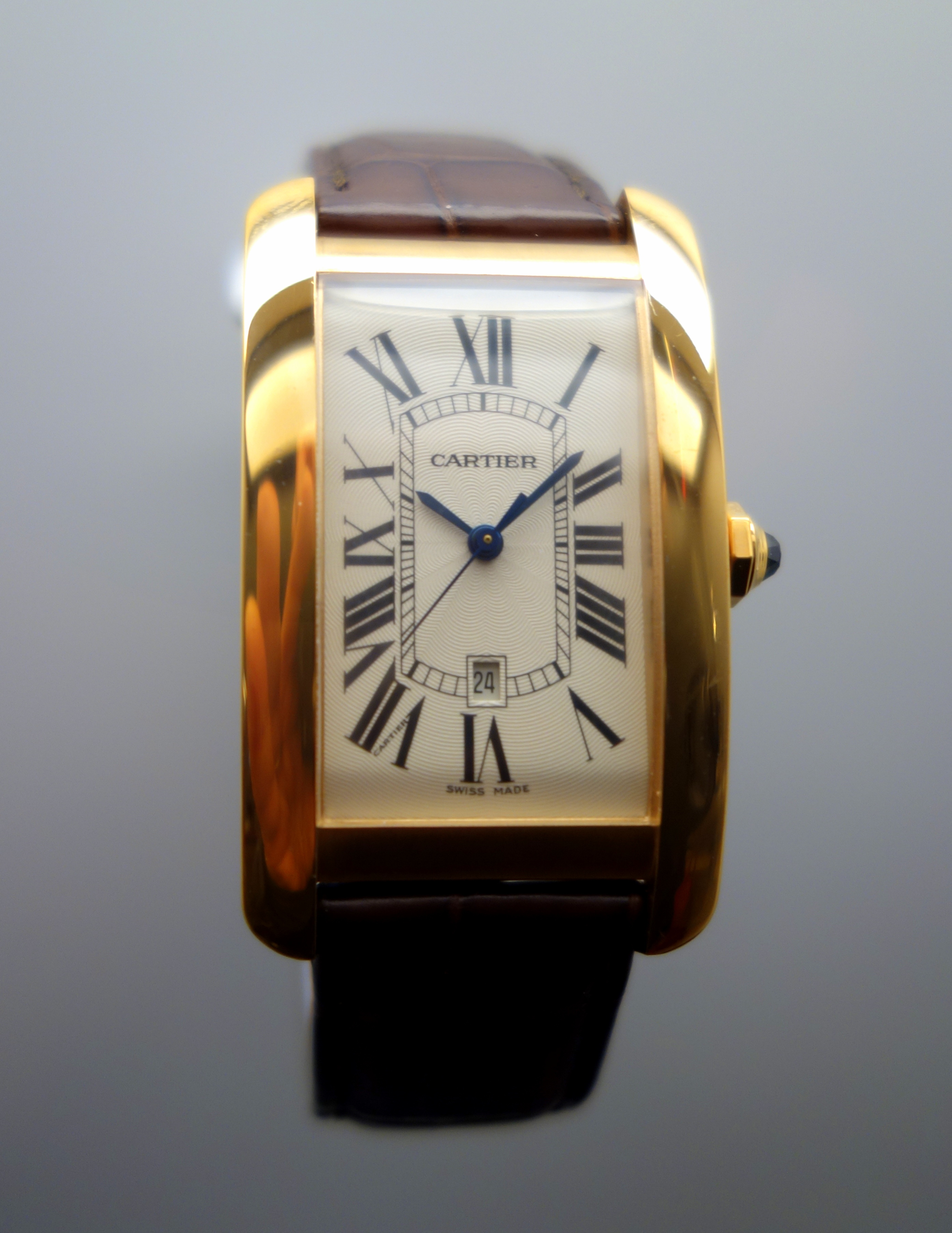
The manual-wind dressy Tank. Rectangular case (33mm × 25.5mm or 39mm × 30mm), Roman numerals, blued steel hands, alligator strap, manual-wind Caliber 1917 MC (38-hour power reserve). The Louis Cartier is the most traditional Tank — manual winding, no date complication, classical proportions — and the most-recommended "serious" dress watch under $5,000 for buyers who want the Tank without quartz. Available in steel, rose gold, and yellow gold.
Oris Aquis Calibre 400 ($3,200)
The 5-day-power-reserve Swiss independent dive watch. 41.5mm steel case, 300m water resistance, Calibre 400 movement (5-day power reserve, 10-year service interval, anti-magnetic to 2,250 gauss), ceramic bezel, sapphire crystal. Oris is one of the few remaining genuinely independent Swiss watch companies (Hölstein founded 1904, family-owned through the Oris-Holding restructuring). The Calibre 400 movement, introduced 2020, is one of the most technically ambitious movements at any sub-$5,000 price — 120-hour power reserve and a 10-year service interval are competitive with watches at $20,000+.
Longines Spirit Zulu Time ($2,950)
The flieger-GMT value. 42mm steel case, 100m water resistance, L844.4 GMT movement (72-hour power reserve, COSC-certified, modified ETA architecture), 24-hour ceramic bezel for second-time-zone tracking. Longines is part of Swatch Group (founded 1832, Saint-Imier). The Spirit Zulu Time is the most-recommended sub-$3,000 GMT watch with COSC certification and the most-recommended traveler's watch in the tier. The L844.4 movement has a true GMT architecture (independently set local hour hand) — a feature Rolex implemented first and most other Swiss makers reserve for $5,000+ watches.
Grand Seiko SBGM221 ($4,500)
The Spring Drive GMT with dial finishing that exceeds the price. 39.5mm steel case, 30m water resistance, Caliber 9R66 Spring Drive movement (72-hour power reserve, ±15 seconds per month accuracy, glide-motion seconds hand), Zaratsu hand-polished case, applied diamond-cut indices, GMT complication. Grand Seiko is the high-watchmaking arm of Seiko, manufactured in the dedicated Grand Seiko Studios in Shizukuishi (mechanical) and Shinshu (Spring Drive). Spring Drive is a unique horological technology — a mechanical movement with electronic regulation — that delivers quartz-grade accuracy with the smooth seconds-hand motion of mechanical. The SBGM221 dial finishing genuinely exceeds Tudor at the same price.
Nomos Tangente Neomatik 39 ($4,200)
The Bauhaus-Glashütte minimalist. 38.5mm steel case, 30m water resistance, Caliber DUW 3001 in-house automatic movement (43-hour power reserve, 3.2mm thick), Bauhaus-derived dial design (slim Roman numerals, off-center sub-seconds at 6 o'clock, no date complication). Nomos Glashütte (founded 1990 in Glashütte, Germany) makes one of the few sub-$5,000 watches with a fully in-house movement designed and manufactured in-house — most Swiss equivalents are ETA-modified. The Tangente Neomatik is the most-recognized Nomos reference and the most-recommended sub-$5,000 minimalist dress watch.
Hamilton Intra-Matic Auto Chrono ($2,295)
The chronograph value. 40mm steel case, 100m water resistance, H-31 automatic chronograph movement (60-hour power reserve, modified Valjoux 7753), reverse panda dial, vintage-inspired tachymeter scale. Hamilton (Lancaster, Pennsylvania 1892, now Swatch Group) sits well below the rest of this tier in pricing but the Intra-Matic Auto Chrono punches well above its weight. The most-recommended sub-$3,000 mechanical chronograph and a defensible alternative to the more expensive TAG Heuer Carrera Heuer 02 ($5,950) for buyers prioritizing value.
What you give up at this tier
The under-$5,000 tier is genuinely luxury territory, but several things still wait above:
- Established sport-watch icons. The Rolex Submariner ($9,200), Omega Speedmaster Professional ($7,400), and Cartier Santos Medium ($7,400) all sit above this tier. The Tudor Black Bay 58 is the closest analogue but not a substitute.
- Master Chronometer-level anti-magnetic certification. Omega Master Chronometer (15,000-gauss resistant, METAS-certified) starts at the Aqua Terra 38 ($5,400). At $5,000 you get COSC chronometer certification but not Master Chronometer-level anti-magnetic protection.
- Hand-finished anglage and polished bevels. Movement finishing visible through a display caseback is machine-finished at this tier. Genuine hand-anglage and Côtes de Genève polishing are $10,000+ features (with the Grand Seiko 9F/9R range as the price-busting exception).
- The "Holy Trinity." Patek Philippe ($30,000+), Audemars Piguet ($25,000+), and Vacheron Constantin ($25,000+) entry points are all far above this tier. The over-$10,000 budget is the entry to the Trinity.
- Reliable appreciation. The Tudor Black Bay 58 has appreciated modestly. Most other under-$5,000 watches hold value but don't grow. Reliable appreciation requires steel sport Rolex or Trinity pieces, both above this tier.
Ownership cost
Watches at this tier need service every 7–10 years. Tudor service runs $500–700 at Tudor service centers (Wempe, authorized Rolex/Tudor watchmakers). Cartier service runs $600–900 at Cartier boutiques. Grand Seiko service runs $400–600 at Seiko Service Centers — meaningfully less than Swiss equivalents. Oris Calibre 400 service runs every 10 years at $500–700 (the longer interval is the key value lever — most Swiss movements need service at 7 years). Total 30-year ownership cost for a Tudor Black Bay 58 with three services: roughly $5,500–6,000, with the watch likely retaining 70–80% of its purchase price.
The financial calculus changes at this tier. A $4,000 Tudor Black Bay 58 purchased today and sold in ten years for $3,200–3,600 has cost the owner $400–800 in depreciation plus three services — roughly $2,000–2,500 in total ownership cost over a decade. A $4,000 Seiko Prospex SPB143 purchased today and sold for $1,800–2,200 has cost roughly $3,000 in depreciation alone over the same period. The Tudor is the more expensive watch but the cheaper ownership.
If you can stretch to under $10,000
The next tier opens up the established sport-luxury icons. Rolex Submariner no-date ($9,200, with retail availability if you build a relationship with an authorized dealer), Omega Speedmaster Professional ($7,400, the only watch certified by NASA for spaceflight), Omega Aqua Terra 38 ($5,400, Master Chronometer with 15,000-gauss anti-magnetic), Cartier Santos Medium ($7,400, integrated bracelet sport-luxury), IWC Pilot Mark XX ($5,800), TAG Heuer Monaco Calibre 11 ($7,300), and the entry JLC Master Ultra Thin ($7,200). The under-$10,000 tier is where established sport-watch icons live. See our under-$10,000 guide for full coverage.
Read next
For the next tier up — established luxury and the first reliably appreciating watches:
For deeper coverage of the sport-watch families this tier introduces:
- Tudor — The Black Bay Family
- Cartier — The Tank, the Santos, and the Crash
- Tudor Black Bay — The Editorial Profile
For the entry tier and full budget coverage: